In poor communities affected by climate change, the rate of malnutrition is high and children with disabilities are especially at risk. CBM’s latest evidence brief shows how a multi-faceted approach can change this.
From evidence to impact: Why reducing child malnutrition needs more than supplementation
Posted on:
Monday, February 16th, 2026
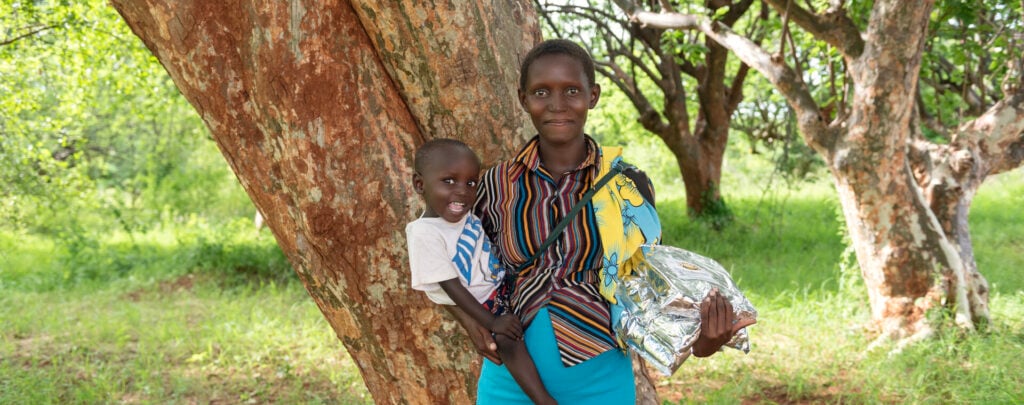
Child malnutrition and disability are closely linked. Exclusion from services make children with disabilities more vulnerable to malnutrition, while malnutrition itself contributes to physical and cognitive disabilities.
In countries severely affected by climate change, where droughts are common, the rate of malnutrition is high. And children with disabilities are at particular risk. Food supplementation plays a vital role in addressing malnutrition. But it isn’t enough to sustain improvements over time.
A three-year CBM project in Tharaka Nithi County, Kenya, took a multi-pronged approach to improve child health and nutrition outcomes. Alongside supplementation, it provided education, support services and resources to strengthen the resilience and capabilities of caregivers. The results show how effective an inclusive approach can be.
What the child malnutrition project set out to do
Together with local partner DOM SPARK, the Reducing Child Malnutrition in Tharaka Nithi County project aimed to improve nutrition outcomes for children aged 0–5. As well as supplementation, it increased the nutritional, financial, and climate knowledge and resilience of the children’s caregivers. And crucially, it recognised that children with disabilities need tailored support.
What was involved
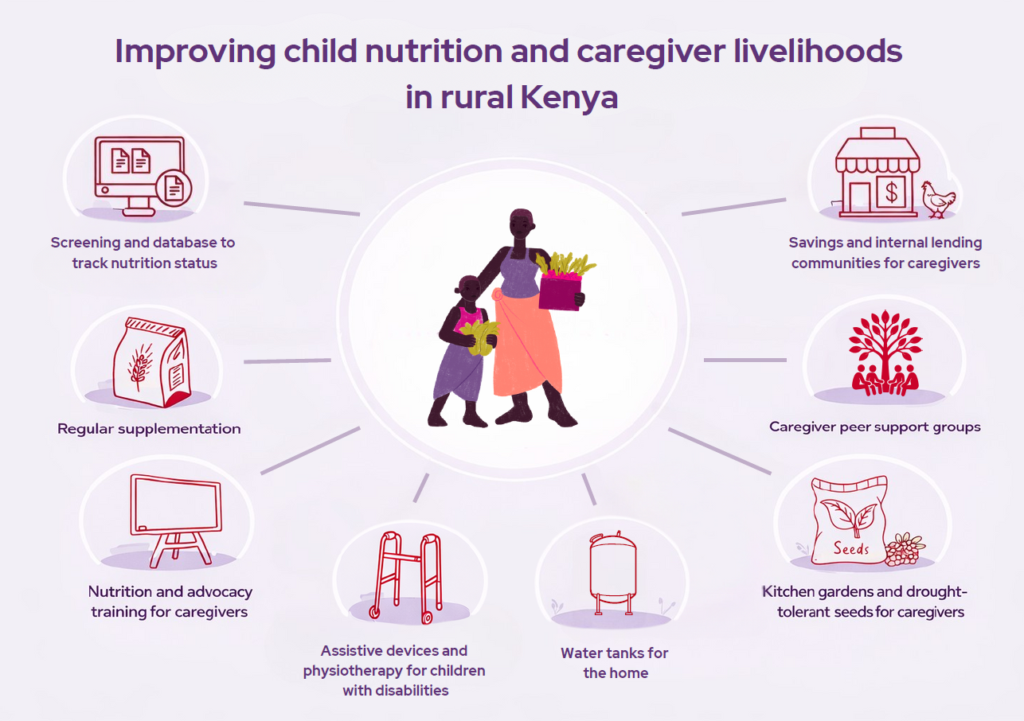
Over three years, the project:
- Identified, monitored and provided food supplementation to 462 malnourished children, including 52 children with disabilities.
- Provided tailored support to children with disabilities. This included assistive devices like wheelchairs and cerebral palsy support chairs, as well as physiotherapy to help with feeding.
- Set up 18 Mother-to-Mother Support Groups to learn about nutrition, kitchen gardening and advocacy skills.
- Formed Savings and Internal Lending Communities (SILCs) to top up household incomes.
- Distributed 345 household water tanks to families involved in the project.
- Developed a Child Malnutrition Database to track individual children’s progress over time.
The impact of supplementation
Supplementation improved children’s nutritional status, but the data collected by the nutrition advisor and health workers revealed important differences. By the end of the project, 77% of children were no longer malnourished. However, for children with disabilities, 30% were still malnourished. This is often because they face more barriers to interventions and sustained recovery.
Caregiver and climate resilience
Where the project made its strongest impact was through caregiver resilience and peer-to-peer support. Through nutrition and healthy cooking education, feeding practices improved. Meanwhile local support groups provided a safe space for caregivers to share success and challenges. Families could make use of the Savings and Internal Lending Communities (SILCs) to buy food during shortages and invest in businesses – for example goat rearing or basket weaving.
Building the communities’ resilience to the harsh effects of climate change was another vital aspect of the project. As a result of advocacy training, peer support groups successfully lobbied county officials to set up water projects and group nursery gardens to grow seedlings. Water tanks were distributed as a direct result of the mothers’ action. These, alongside kitchen gardens and drought-tolerant crops, helped families maintain a supply of food even during the dry season.
The impact on children with disabilities
For caregivers of children with disabilities, assistive devices and physiotherapy training were transformative. The physiotherapy training brought together caregivers of children with cerebral palsy and helped them support their children during mealtimes to eat the supplement. And by replacing or providing devices like wheelchairs and walking frames, children with disabilities can better participate in daily life long after the project has finished.
What this means for future practice
This project clearly shows that child malnutrition needs a multi-faceted approach. Food supplementation needs to be combined with caregiver education, livelihood support and climate resilience strategies. And disability inclusion must be prioritised from the start – to make sure nutrition programmes and volunteer health workers reach children with disabilities. This is what will help break the connection between malnutrition and disability.
Caregivers are central to making this change sustainable. If they have the skills, confidence and data, they can improve child outcomes and influence wider systems.
As climate change continues to intensify food insecurity, inclusive, resilience-building models like this offer a practical pathway to ensuring no child is left behind.
With thanks to our funding partner Nous Cims.
Photo: ©CBM/Plateau Media
More news like this
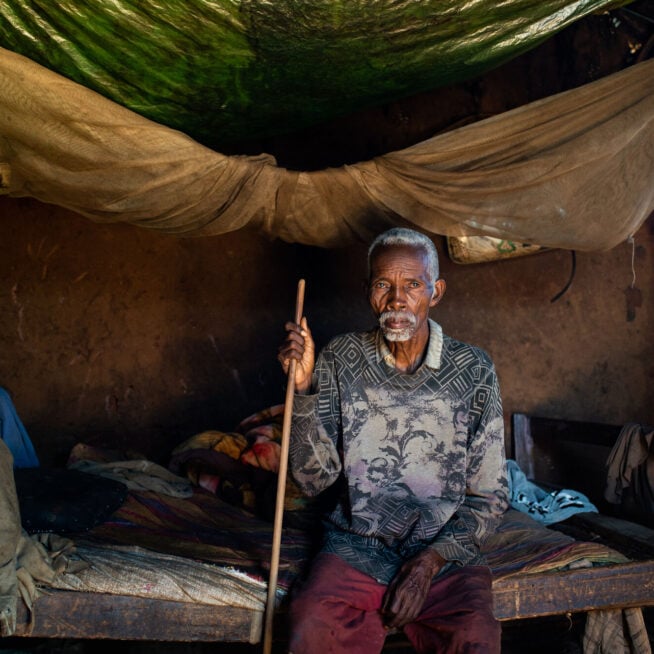
March 20, 2026
CBM UK highlights the impact of the government’s cuts to overseas aid on people with disabilities
Less money will mean less access to health services, less access to vital medicines, less access to education and economic opportunities as well as vital humanitarian assistance.
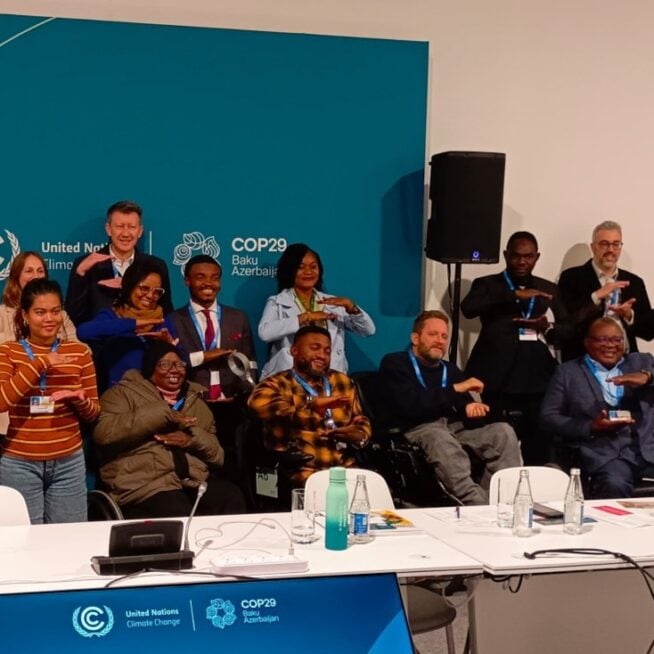
February 27, 2026
Historic Breakthrough: People with Disabilities Win Official Recognition in Global Climate Negotiations
CBM UK is delighted to share a major breakthrough for disability rights and climate justice: the official recognition of the Disability Caucus by the United Nations Framework Convention on Climate Change (UNFCCC).
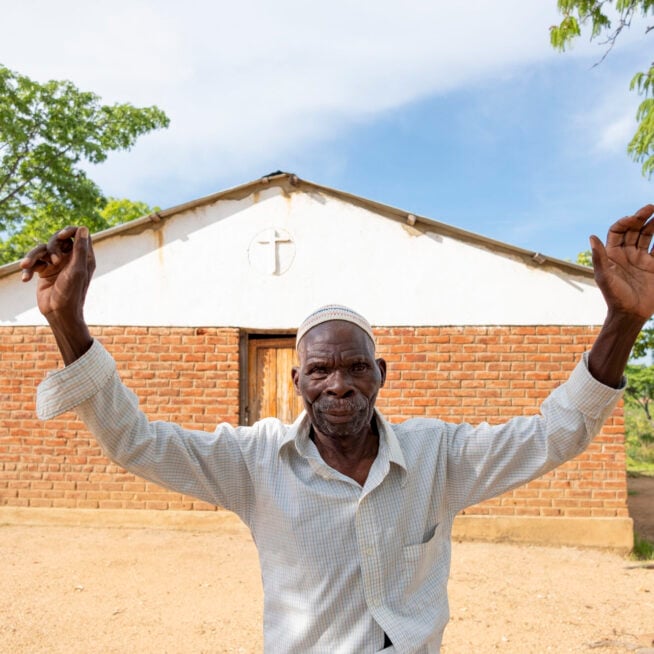
February 17, 2026
Lent 2026: ‘Loose the chains of injustice’
This Lent 2026, we’re launching a new resource which invites churches, communities, and individuals to learn more about the cycle of poverty and disability, reflect on the injustice of avoidable blindness, and to share our vision of a just world where all people enjoy their human rights and achieve their full potential.