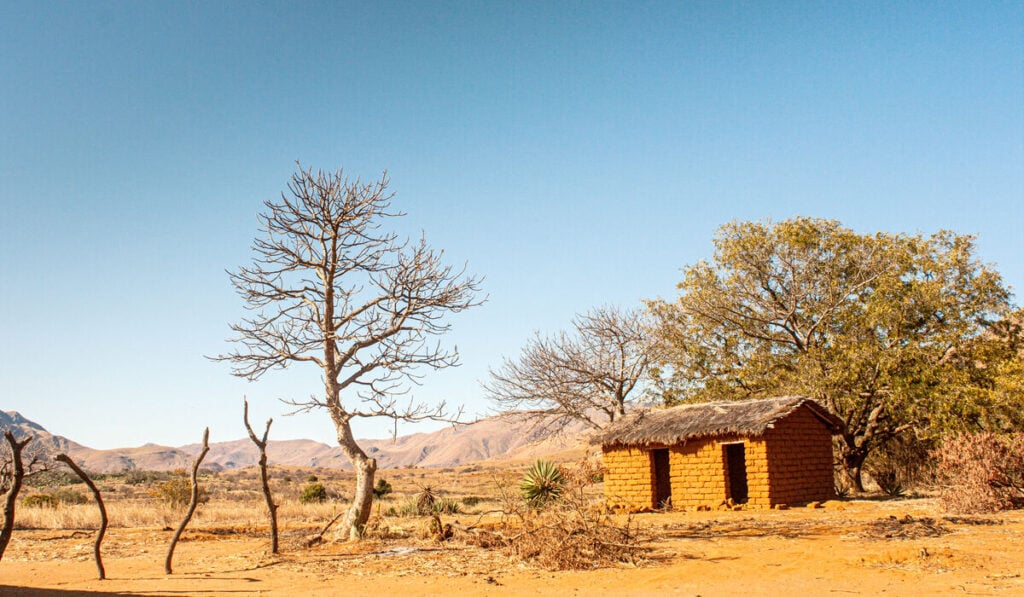
COP30 in November 2025 saw disability advocates work together to call for inclusive climate action and take another step towards formal recognition of the Disability Caucus.
Beyond COP30: where to from here for disability inclusive climate action?
Posted on:
Friday, December 12th, 2025
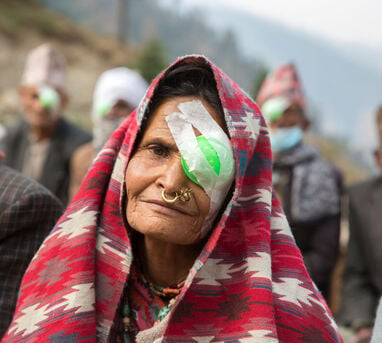
Side events co-organised by CBM were an opportunity to hear from people with lived experience of disability, like youth activist Munah Shakya from OPD partner, the National Indigenous Disabled Women Association Nepal (NIDWAN).
“We indigenous youth with disabilities are not victims; we are changemakers. Our voices carry the power of resilience and hope. Climate justice must reflect our realities, because we are part of the solution,” explained Munah at CBM’s COP30 side event, ‘From Exclusion to Action: Global South Women with Disabilities Leading Inclusive Climate Solutions’.
More widely, the Disability Caucus met government representatives from the UK, Nigeria, Indonesia, Australia, EU and more to discuss the need for inclusive approaches. We also discussed a disability inclusive just transition and fair funding for people with disabilities with Gillian Martin, the Scottish Government’s Cabinet Secretary for Climate Action and Energy.
Just Transition victory
Progress on a Just Transition was a major achievement of COP30. The Belém Action Mechanism or BAM aims to coordinate international cooperation for just transition initiatives – including worker protection – in the green energy transition. No COP decision has ever carried such ambitious language on rights and inclusion: it’s a testament to massive civil society pressure.
“For the first time, labour rights, human rights, the right to a clean environment, ‘free, prior and informed consent’ and the inclusion of marginalised groups are all recognised as core to achieving more ambitious climate action…” Anabella Rosemberg, Climate Action Network International (read full article)
Where COP30 failed disability inclusion
Despite the wins, developed countries once again failed to make progress and take meaningful action on climate finance. By stalling or blocking commitments on adaptation finance, mitigation ambition, and the transition away from fossil fuels this COP did not deliver on disability inclusive climate action so urgently needed.
The evidence is clear: people with disabilities are disproportionately affected by climate disasters. Existing inequalities and discrimination are exacerbated. For so many of the 1 billion people with disabilities in low-and-middle income countries, addressing the crisis is a matter of life or death.
What’s next for disability inclusive climate action?
As the activity at COP30 fades, we must maintain the momentum on disability inclusive climate action beyond these annual ‘moments’.
We’ve unpacked both the barriers to action and the levers to speed up progress in a new CBM UK policy paper on disability inclusion and climate change.
1. Addressing the issues
The relationship between climate change treaties and disability rights obligations, such as the UN Convention on the Rights of Persons with Disabilities and the UNFCCC Paris Agreement, is at best fragmented and, at worst, entirely absent. Despite clear connections between climate and disability, action remains siloed. To fully achieve climate resilience, governments must confront implementation challenges and recognise that disability inclusion cannot merely be an “add-on” but is essential for effective climate responses.
2. The barriers to disability inclusive climate action
We have seen in repeated COPs that climate policy spaces are often dominated by powerful interests. Far too often governments and donors crowd out the voices of rights holders, including people with disabilities. Those who are overlooked struggle to be heard. They are at risk of being seen as peripheral to “real” concerns, even by climate activists.
This lack of inclusion in climate planning is compounded by significant data and knowledge gaps. Lived experience and qualitative evidence is undervalued, with bias and discrimination across communities marginalising disability concerns.
This can lead to policymakers not being confident or knowing how to effectively partner with the disability movement and Organisations of Persons with Disabilities (OPDs). They may not be willing to ensure accessibility and participation is central to their approach. This was demonstrated in negotiations and outcome documents at COP, where specific references to marginalised groups, including disability, were in the main deleted.
3. The way forward
Overcoming these barriers requires systemic change, to recognise people with disabilities as technical experts and active agents in climate decision-making. CBM UK recommends four steps for governments to take for disability inclusive climate action:
1. Recognition. The formal recognition of persons with disabilities as a Constituency (not just a caucus) within UNFCCC processes will emphasise the importance of their lived experience and contextual knowledge to advance climate action.
2. Better data. Disability visibility and data disaggregation can be improved with easily applied data tools in all donor-funded climate programmes.
3. Joined up policy. Budgets for accessibility and reasonable accommodations must be ring fenced across government policies and in all climate-related investments.
4. Accessibility first. Embedding universal design across all new green infrastructure and post-crisis reconstruction, and ensuring climate finance reaches the local level, is essential for building inclusive, sustainable, and resilient societies.
Read the full recommendations in CBM UK’s Locating Disability Inclusion in Climate Action policy paper.
Photo: ©CBM/Viviane Rakotoarivony
More news like this
March 20, 2026
Holy Week 2026
Join us this Holy Week as we reflect on Jesus’ entry to Jerusalem, death, and resurrection. For each day, we have written a short prayer for personal or group reflection.
March 16, 2026
Make more impact with a tax-efficient donation
Find out how you could increase the value of your support and create a bigger impact for people trapped in the cycle of poverty and disability.
March 5, 2026
Preventing obstetric fistula: Why safe childbirth remains out of reach for many women
This International Women’s Day we’re shining a light on the lack of access to safe childbirth for all women – particularly the world's most marginalised women.