A new CBM UK evidence brief published in time for World NTD Day 2026 demonstrates how holistic interventions significantly improve the mental health and wellbeing of people affected by skin NTDs.
From evidence to impact: Why mental health matters in Neglected Tropical Diseases
Posted on:
Wednesday, January 28th, 2026
Neglected tropical diseases (NTDs) are a group of preventable or treatable diseases that affect more than one billion people worldwide. They are neglected because they impact some of the world’s poorest and hardest-to-reach people.
Programmes to eliminate and prevent NTDs usually focus on mass drug administration and clinical intervention, which is vital and effective. However, NTDs affect people’s mental health as well as their physical health. That’s because conditions like leprosy and lymphatic filariasis, which have visible symptoms, can lead to stigma and social exclusion. As a result of this discrimination, there is a strong link between NTDs and depression and anxiety.
CBM projects integrate NTDs and mental health
CBM UK projects in Nigeria identified high rates of depression, anxiety and reduced wellbeing among people with NTDs. For example, our Neglected Mind–Skin Link Project found that over 60% of people with visible skin NTDs had depression – almost double the rate of depression in people without. Compared to their peers, people with lymphatic filariasis were nine times more likely to have depression and people with leprosy were twice as likely.
Building on these learnings, our CiSKuLA Project took a holistic, person-centred approach to NTD management. It provided support in inclusive Water, Sanitation and Hygiene (WASH), mental health, livelihoods, and morbidity management and disability prevention. Again, the results were positive: 88% of participants surveyed reported their sense of dignity had improved, as well as their health and livelihood.
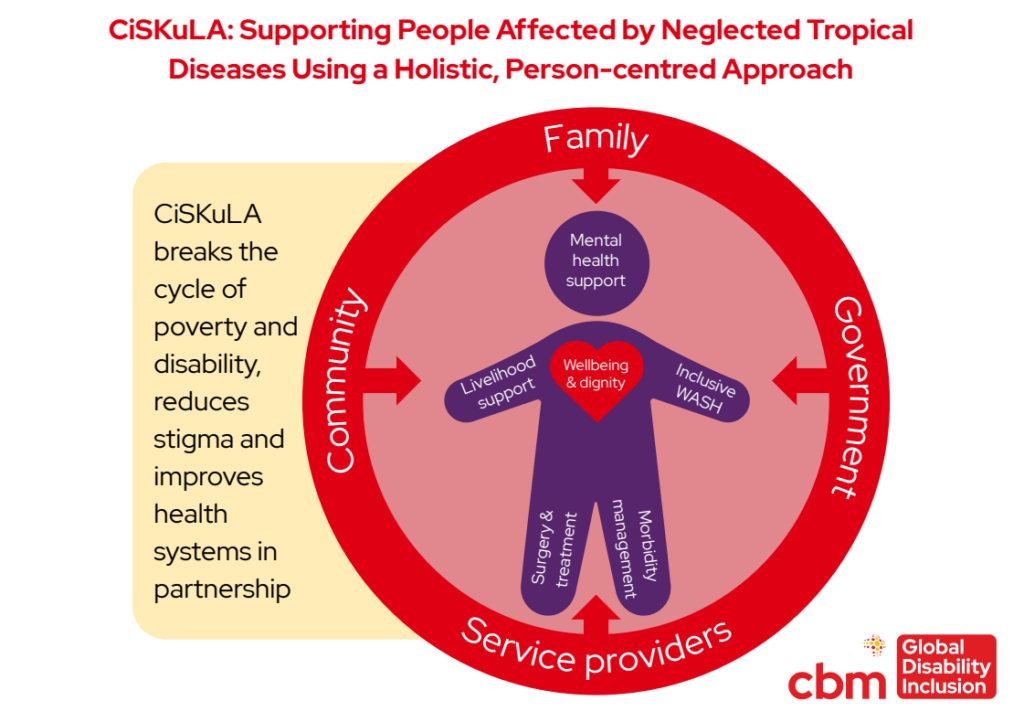
Both projects showed what inclusive, person-centred care can look like
Taking a holistic approach to NTDs
Now, our most recent project – ‘Strengthening Access to Mental Health Care for Persons Affected by NTDs’ – shows the impact of this learning. This time the project focused specifically on improving the mental health and wellbeing of people affected by skin NTDs. It did this through interventions designed to help people participate in community life, become more financially independent and get the mental health care they needed, for example through:
- self-help groups,
- skills and livelihoods training,
- anti-stigma community meetings, and
- NTD-specific mental health training for frontline health staff.
Improved mental health and wellbeing
Across the project, nearly 850 people accessed mental health services, 20 self-help groups were established, and more than 500 people joined peer wellbeing sessions. Over 100 healthcare providers were trained on mental health care for people affected by NTDs. And 100 counsellors received safeguarding and one-to-one support training.
As a result, there were major reductions in both the prevalence and severity of depression and anxiety disorders. There was also an increase in well-being. 70% of participants had a form of depression at the start of the project, but by the end this had reduced to less than 30% .
Integration is key
As all these projects demonstrate, the combination of peer support, anti-stigma community work, livelihood training and strengthening of mental health services is vital. Implemented together, these steps make the wider environment more inclusive and address all the impacts of NTDs – not just the physical symptoms.
For example, peer support groups and anti-stigma campaigns improved social acceptance and a willingness to join community life. “I forgot all my sorrows because I interact with people in the group, my sorrow has turned into joy,” said one participant. Meanwhile, livelihood support helped participants earn a living and become more financially independent.
Learnings for World NTD Day 2026
As we think about World NTD Day 2026, the message is clear: mental health is essential to effective NTD programming, not an add-on. That’s because it challenges stigma, protects wellbeing and can keep people out of poverty.
With the launch of the World Health Organization’s Essential Care Package (ECP) to address mental health and stigma for people affected by NTDs in February, CBM’s projects demonstrate in practice how effective a holistic, person-centred approach to NTD management can be.
With thanks to our funding partner, Anesvad Foundation.
Read more about our work in NTDs and mental health
More news like this

July 20, 2026
Promises matter: why the new PM must keep inclusion at the top of his to-do list
Andy Burnham has been announced as the new UK Prime Minister. At CBM UK, we urge him and the government to keep people with disabilities at the heart of his international agenda.
June 22, 2026
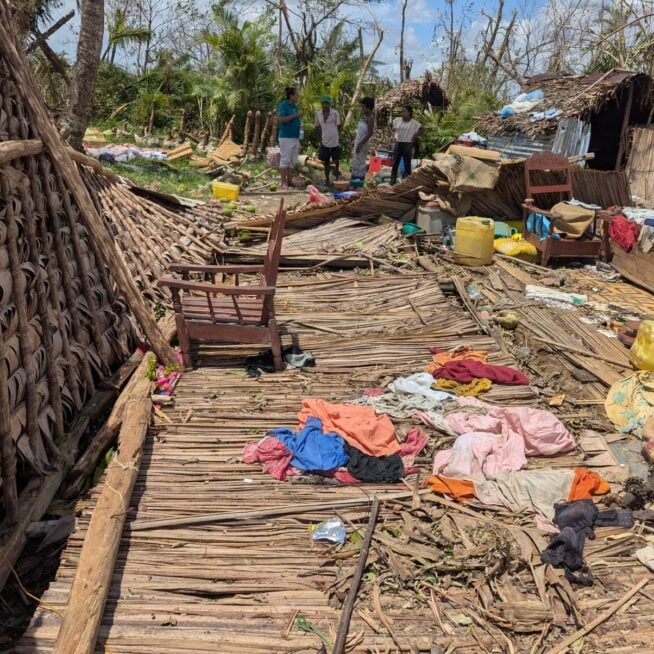
Responding to Cyclone Gezani in Madagascar
Thanks to funding from Jersey Overseas Aid and generous donations from our supporters, CBM has been providing emergency relief to ensure that people with disabilities are not left behind.
May 20, 2026
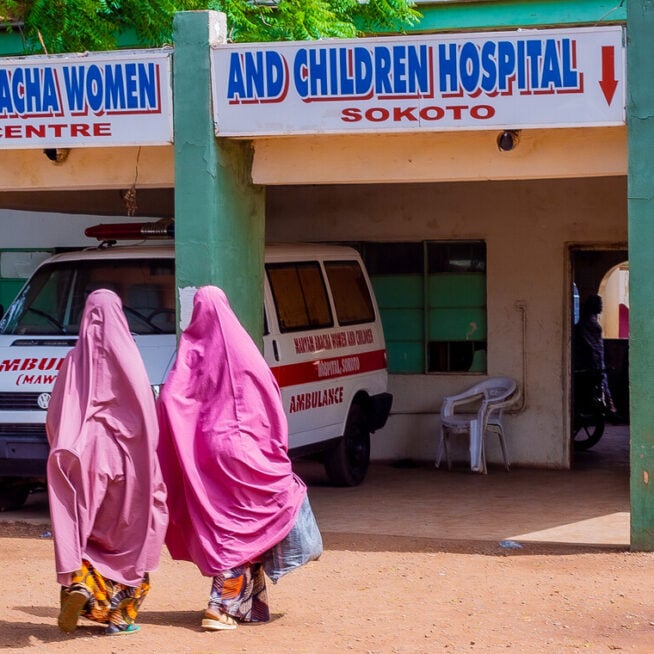
Obstetric fistula and why health systems must meet women’s essential needs
Why International Day to End Obstetric Fistula is a vital reminder of the fundamental right of every woman and girl to health – particularly sexual and reproductive health.