
Launched at COP31, new research commissioned by CBM reveals why climate finance is failing to reach Organisations of Persons with Disabilities – and why their leadership is essential to achieving effective climate action.
New CBM research exposes disability gaps in climate finance – and how to close them
Posted on:
Wednesday, November 11th, 2026
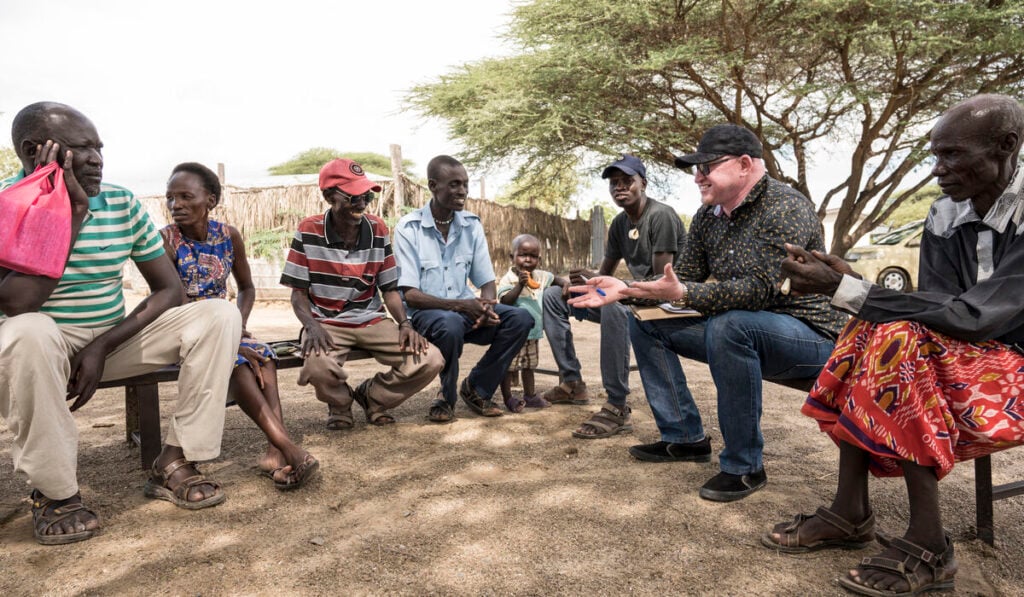
Countries that have contributed least to the climate crisis are often among those facing its greatest consequences. And for people with disabilities and their representative organisations (OPDs), the challenges posed by extreme weather events are even greater.
Recognition that climate finance must reach people with disabilities is growing. And there is more commitment from major climate funds to locally led adaptation and decision making in climate policy. But as the research outlines, a gap remains between promises about disability inclusion and what happens in practice.
And the problem isn’t just about representation – it’s about effectiveness. Climate finance should be building resilience among those most vulnerable to climate shocks. But if it overlooks one of the largest and most marginalised population groups then climate action risks being both inequitable and ineffective.
The barriers to disability-inclusive climate finance
Disability-Inclusive Climate Finance: The Road to COP31 and Beyond, examines how funding from three major international climate funds (the Green Climate Fund, the Adaptation Fund, and the Global Environment Facility) reaches national and local organisations in Kenya, Indonesia and Nepal.
The findings reveal a persistent gap between commitments to disability inclusion and what happens in practice. While disability is recognised in policies, it is far too often never implemented in practice. The parameters determining who receives funding, who makes decisions and how success is measured rarely make inclusion a requirement.
The report highlights three examples:
- Kenya: Climate finance reaches all 47 counties in the country, but there is no consistent funding route to Organisations of Persons with Disabilities (OPDs), which also lack systematic representation in local decision-making.
- Indonesia: National climate spending systems do not consistently track disability inclusion, while complex funding requirements make it difficult for smaller organisations, including OPDs, to access finance.
- Nepal: Disability is recognised in climate policies, but there are no shared requirements defining what disability-inclusive outcomes projects must achieve.
Across the evidence reviewed, researchers identified no case where funding from the three climate funds reached an OPD directly. Although the report could not establish how much climate finance reaches people with disabilities overall, this finding is important because OPDs are led by people with disabilities themselves. It shows how they can be excluded from both financial resources and the power to decide how they’re used – which is what can prevent policy commitments from becoming meaningful action.
This matters because it’s OPDs who have the experience, ideas and solutions to implement adaptation strategies that not only save lives but empower and strengthen people with disabilities, their families and communities.
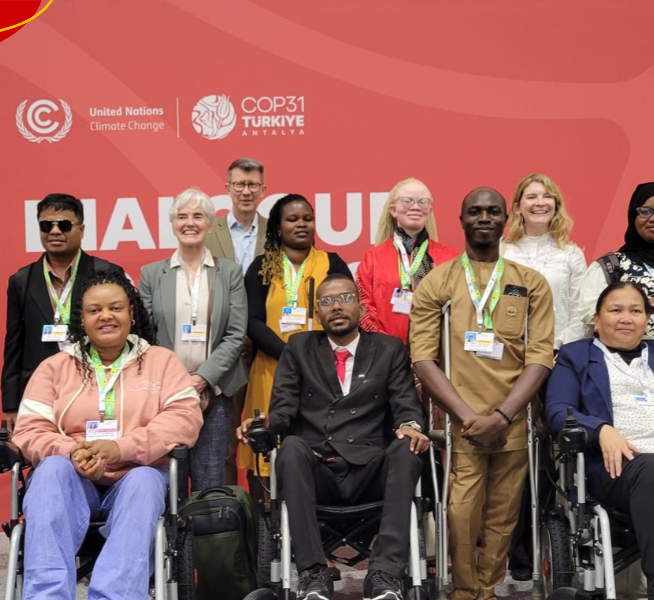
Olajide from Disability Not A Barrier in Nigeria is representing the Disability Caucus at COP31 thanks to funding from the Scottish Government. As he explains: “Climate finance must be accessible and inclusive, supporting disability-friendly climate adaptation, renewable energy, green jobs, entrepreneurship and climate-resilient livelihoods. This will empower persons with disabilities, strengthen their families and communities, and recognise their capacity to contribute to climate solutions. Climate finance should not treat persons with disabilities as passive beneficiaries but as equal partners, innovators and leaders in building a sustainable and climate-resilient future.”
What needs to change to make climate finance disability-inclusive?
Launched to coincide with COP31, the report shows that the building blocks for fairer climate finance already exist. The challenge is making them work together. For example, how approaches to gender equality could be adapted to make disability inclusion a measurable requirement when funding is approved, allocated and monitored.
The report also highlights why locally led finance is not automatically inclusive. Bringing funding closer to communities does not guarantee that people with disabilities have a say in how it is used. It must go further than this, to ensure OPDs have meaningful roles in setting priorities, making decisions and allocating resources, with funding available to support accessible participation.
And these changes must work together. From involving OPDs at the earliest stages of planning to removing barriers to accessing finance and monitoring outcomes, a joined-up approach is essential.
Turning commitments into meaningful action at COP31
COP31 is an opportunity to make climate finance fairer, more accessible and more accountable. CBM is calling on governments, international climate funds and decision-makers to ensure disability inclusion is built into climate financing decisions – and that people with disabilities and their representative organisations have the power to shape those decisions.
Find out more
Read CBM’s new report to explore the findings and recommendations: Disability-Inclusive Climate Finance: The Road to COP31 and Beyond
Watch the report launched live at CBM’s COP31 side event:
Accessible Climate Finance: From Global Funds to Local Impact
12 November 2026 | 13:15–14:45 | Side Event Room 1, GORDION
Image: © CBM Global / Amunga Eshuchi
More news like this
November 11, 2026
Scottish government funding brings more disability advocates to COP31
COP31 is expected to see one of the largest Disability Caucus delegations yet. And that’s due in part to funding from the Scottish Government.
October 30, 2026
CBM Global makes five commitments to improve access to eye care
Everyone should be able to get the eye care they need. But cost, distance and inaccessible services still prevent many people from getting an eye examination or treatment.
October 6, 2026
World Sight Day: shining a light on eye health and CBM’s work
This World Sight Day, we’re shining a light on the importance of accessible eye care and the simple innovations helping to bring sight-saving services closer to the people who need them.