
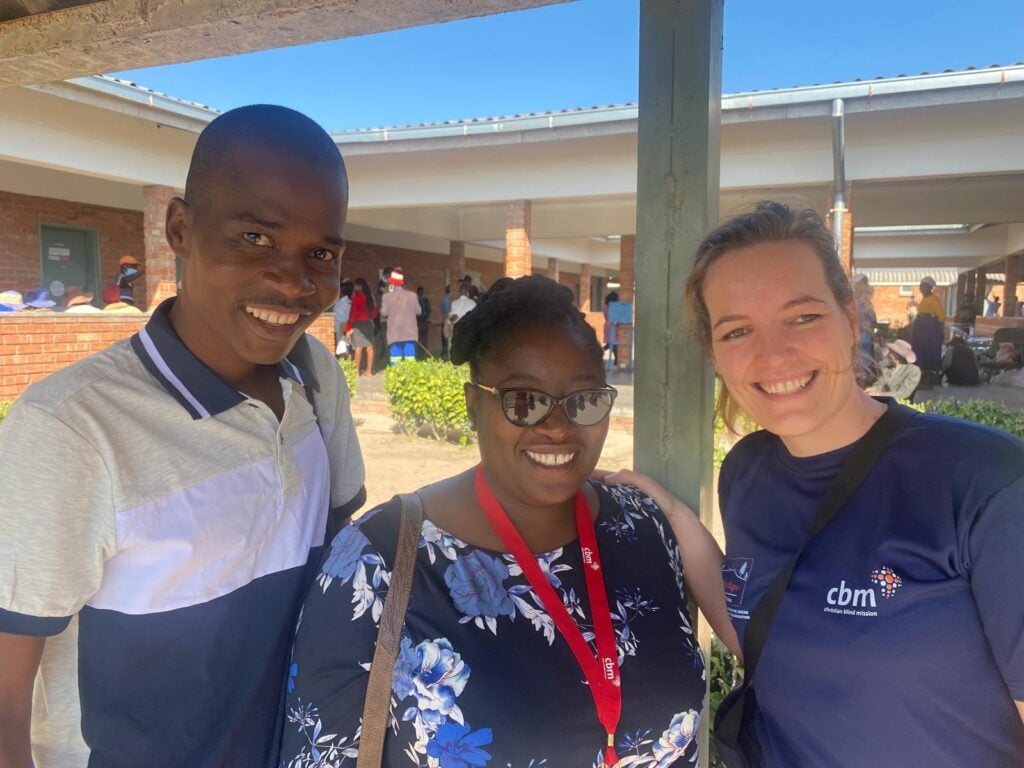
Elfreda Whitty is a Programme Manager at CBM UK. She travelled to Zimbabwe to visit Light Up Lives – a three-year project that has been improving vision for communities in Zimbabwe’s Midlands Province.
Visiting Light up Lives in Zimbabwe
Posted on:
Wednesday, April 22nd, 2026
Author:
Elfreda Whitty
A long road to reach the most marginalised
As we bumped along the road, five hours into our journey, I was beginning to wonder if the village that we were visiting actually existed and if I would ever see a smooth road again.
Feeling hot, uncomfortable and a little ashamed of my lack of resilience, I thought I’d better just try to enjoy the beauty of the landscape as our 4×4 rumbled along.
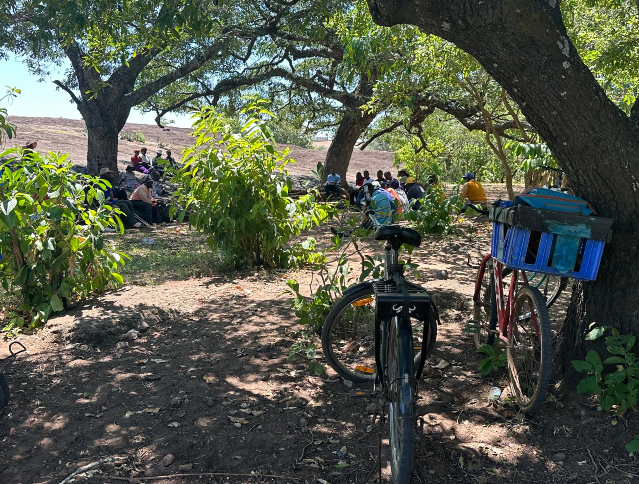
Eventually, we reached Mataga village in Mberengwa District, and the project participants, who were waiting for us under some trees to shelter from the unrelenting midday sun.

Transforming eye health in Zimbabwe’s Midlands
Zimbabwe’s Midlands Province had been almost completely neglected of eye health services until CBM UK’s intervention.
The three-year ‘Light Up Lives’ project, which was funded by the UK government and CBM UK supporters through UK Aid Match, has improved access to quality, inclusive, and comprehensive eye health services to over 54,000 people across the region.
It has improved both the quantity and quality of eye health services through the provision of cataract treatment training, equipment, essential medicines, consumables, and infrastructural improvements across eight district hospitals.
It has carried out 2,557 cataract surgeries, supplied 2166 spectacles and trained 1,146 primary health care workers who can now raise community awareness, deliver basic eye care services such as refraction, and reinforce referral systems. The project also invested in advocacy for improved eye health service delivery.
Working with community leaders
We were meeting with community leaders (community, faith and traditional leaders), to discuss their role in encouraging more people to visit local clinics and improve the number of referrals.
As part of this activity, our local partner HelpAge Zimbabwe (HAZ) were rolling out a pilot scheme to introduce clinic referral cards for the community leaders to be able to promote awareness and educate community members on safe eye health practices, and dispelling harmful myths and practices. The referral cards are then used to trace the number of patients who have been referred to local clinics.
The long drive to the village had really underlined to me how the project is reaching the most marginalised. It also highlighted the challenges for community members to reach the clinics and hospitals for treatment.
Challenging harmful practices through education
I watched the team, including the district nurse, educate the community leaders on eye health. It was done in such an engaging and respectful way that allowed for a very open discussion amongst the group – this was evident even without translation from my colleague.
The project team acknowledged the efforts of the community leaders and their role in the community. And then they explained their intention to build a robust system which prevents outbreaks of illnesses, because so many people consult traditional healers and faith healers before going to government health clinics.
We heard how the community leaders recognised there was an eye health problem. Some of them told us how they have been treating eye problems with salt or urine drops in the eye. And there have been reports of traditional healers using a mix of herbs, spiritual guidance, and unconventional remedies.
Building trust and strengthening systems
During the session, the project team showed me the referral cards which they’ve trained the community leaders on how to use. The leaders were also given free screening and were offered to have their own cataracts removed as eye health champions, so they could better understand the benefits of the clinical treatment.
As a result the recognition and appreciation of leaders’ roles by the Ministry of Health is fostering trust, confidence, and a willingness to collaborate.
Looking ahead
Sadly, we had to leave early to get back to Harare before dark, but I was delighted to see a glimpse of the new pilot being put into action, which is now being rolled out to the remaining districts in the province. This will provide greater sustainability to inclusive eye health services in Zimbabwe.

While the UK Aid Match-funded project finished in July 2025, CBM UK is continuing to support the eye health work in the Midlands Province for at least three more years.
More news like this
September 29, 2026
What is COP31 and why does it matter for people with disabilities?
As we approach COP31 this year in Türkiye, CBM UK reflects on what COP is, why it’s important, and what it means for people with disabilities across the world.
September 22, 2026
Strengthening disability inclusion with CAFOD
Kirsty Smith, CEO of CBM UK, reflects on our two-year partnership with CAFOD to strengthen disability inclusion across its Nigeria programme and wider global work.
August 4, 2026
Putting people at the heart of change: Andy Burnham’s chance to rewrite Britain’s international development legacy
In 2024 Labour promised a world free from poverty on a liveable planet.