At this year’s Bonn Climate Change Conference, known as SB64, the Disability Caucus showed just how far disability inclusion has come – and demonstrated how much further it can go.
Disability inclusive climate action gains momentum at SB64
Posted on:
Saturday, July 18th, 2026
Author:
Mark Barrell
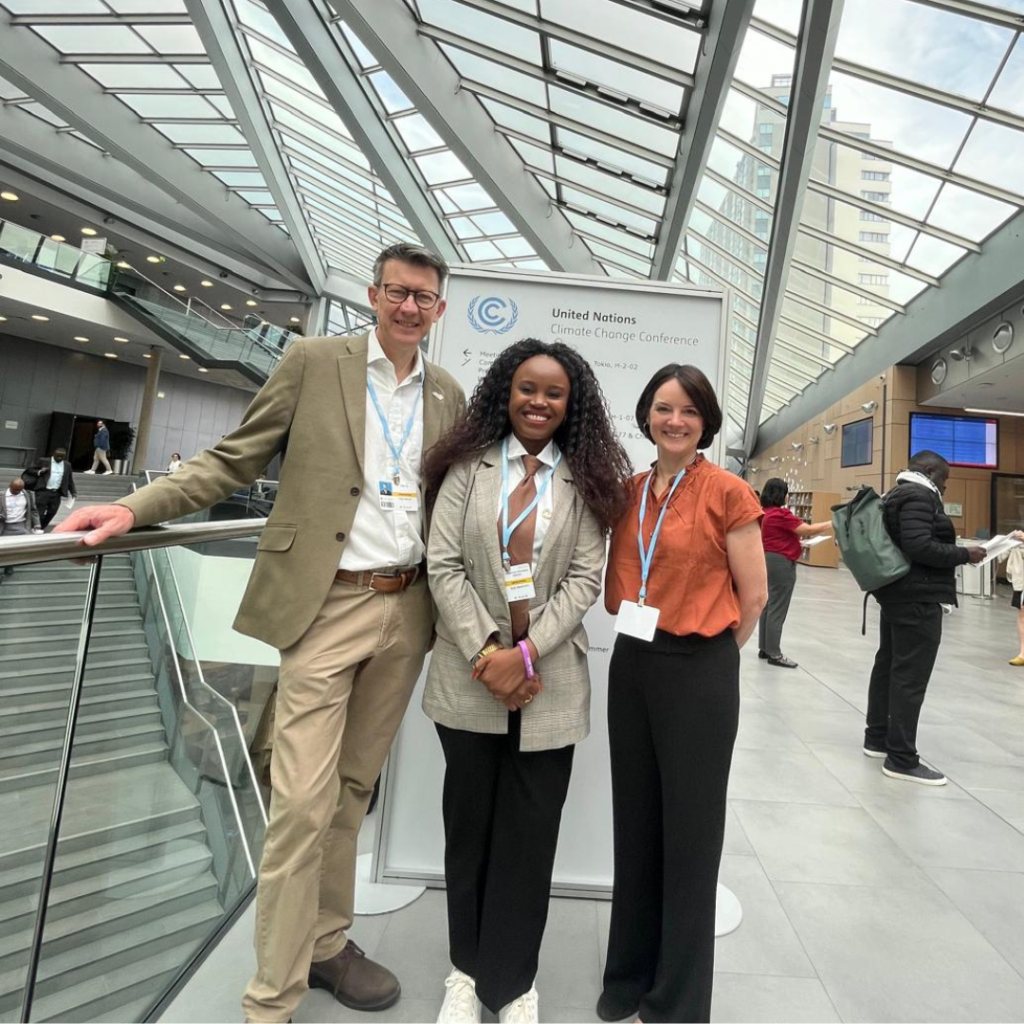
Over two weeks of negotiations, workshops, side events, bilateral meetings and corridor conversations, people with disabilities and their representative organisations were more visible, more coordinated and more engaged than ever before. What was once a small group of a few people has grown into a vibrant Disability Caucus, made up predominantly of Organisations of Persons with Disabilities (OPDs). This growing coordination is helping to build a stronger shared message that disability inclusion must be an integral part of climate decision-making in the United Nations Framework Convention on Climate Change (UNFCCC) process.
A strong push for ‘constituency status’
A major focus at SB64 was the call for the Disability Caucus to be formally recognised as a UNFCCC constituency. The message was simple and powerful. Under the UN Convention on the Rights of Persons with Disabilities (CRPD), States have legally binding obligations to ensure the full and meaningful participation of persons with disabilities in decisions that affect their lives. This gives disability inclusion a strong rights-based foundation that recognition should not be delayed within the UNFCCC process.
With three existing constituencies expressing support, and Parties noting the request for constituency status in 2025, the Caucus returned this year with clearer advocacy, stronger relationships and a sharper ask leading to important progress.
In 2026, for the first time, Parties including Guatemala and Kenya alongside the African Group called specifically for disability constituency recognition with other Parties and delegations from South America, Europe and Asia Pacific engaged in formal and informal conversations.
Disability inclusion across the negotiations
Disability inclusion was also more relevant across many areas of the climate negotiations.
On the Global Goal on Adaptation, the Caucus identified disability data disaggregation as one of the most important entry points. Without this, climate impacts on persons with disabilities remain hidden, and policies, finance and adaptation plans risk leaving people behind.
And in the Just Transition workstream, there were references to persons with disabilities in some of the text on inclusive and participatory just transition pathways.
On capacity building, the Caucus noted that the proposed 2026–2027 work programme does not yet sufficiently include disability and follow-up must ensure that national and regional climate approaches include people with disabilities and OPDs.
And agriculture was identified as an area for future advocacy. Disability is largely absent from agriculture-related negotiations, despite the direct links between climate impacts, food systems, livelihoods and persons with disabilities.
Caucus members, including representatives from CBM UK, followed the Action for Climate Empowerment (ACE) workshop closely, and as we discuss here will continue to highlight disability inclusive approaches at COP31.
Solidarity and building alliances
Beyond the negotiating rooms, the Disability Caucus was active across a wide range of side events, workshops and civil society spaces. There were new faces, wider interest and greater awareness, and the inclusion of youth with disabilities was especially important, as they remain underrepresented in climate spaces.
That representation included speaking at the side event “Loss and Damage for Children: Advancing Recognition, Evidence & Inclusive Cross-Sectoral Solutions”, co-hosted by CBM UK and CBM Global Disability Inclusion, UNICEF and Cambridge University Association and Press. Ruth Machacho, from Mombasa Kenya, and Executive Director of E-Lite Ability Foundation Africa, highlighted the lived experiences of children and youth with disabilities and the continuing gap in disability-specific reporting and the need for stronger evidence on how climate change affects persons with diverse disabilities, alongside lived experience.
One of the most hopeful developments at SB64 was the growth of allyship. Women and Gender, Youth, Indigenous Peoples and other constituencies, alongside climate justice groups and youth movements all supported the Disability Caucus to raise Caucus concerns and push for constituency status. These relationships matter because they create visible, coordinated support across civil society as well as providing experience and lessons on how the Disability Caucus can build recognition and momentum.
Looking towards COP31 in Türkiye with hope
SB64 did not deliver everything the Disability Caucus wanted. Disability references remain inconsistent, text bracketed, and understanding among Parties uneven. But Bonn demonstrated real progress, with the Disability Caucus larger, more visible, organised and ready for Constituency status.
The message from Bonn is clear, disability inclusion is gaining profile in the UNFCCC process, but only full recognition will lead to meaningful participation and meet party obligations under the UN CRPD. As the road to Türkiye begins, there is reason for hope. With continued Party engagement, stronger alliances and the leadership of persons with disabilities, COP31 can build on the momentum to a climate process where no one is left behind.
More news like this
September 29, 2026
What is COP31 and why does it matter for people with disabilities?
As we approach COP31 this year in Türkiye, CBM UK reflects on what COP is, why it’s important, and what it means for people with disabilities across the world.
September 22, 2026
Strengthening disability inclusion with CAFOD
Kirsty Smith, CEO of CBM UK, reflects on our two-year partnership with CAFOD to strengthen disability inclusion across its Nigeria programme and wider global work.
August 4, 2026
Putting people at the heart of change: Andy Burnham’s chance to rewrite Britain’s international development legacy
In 2024 Labour promised a world free from poverty on a liveable planet.