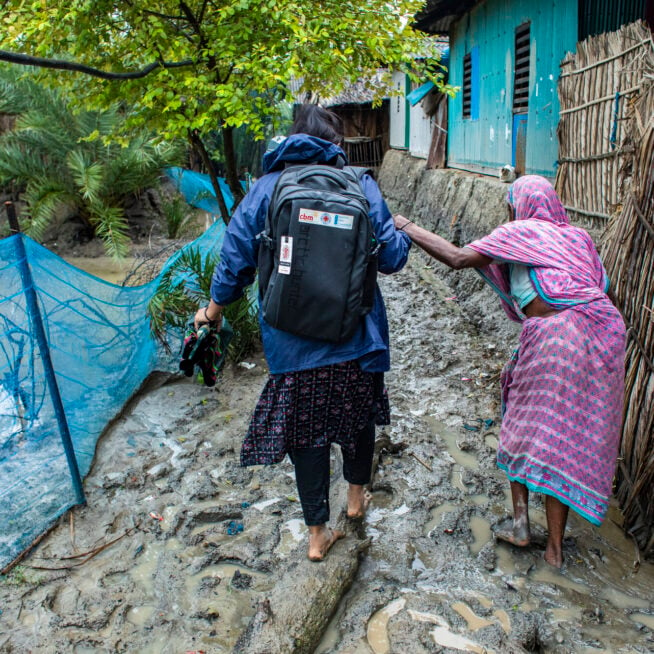
People with disabilities are among the hardest hit by climate change. Yet too often they are left out of decision making around climate planning and responses, including mitigation and adaptation, that shape our collective future. As we approach COP31 this year in Türkiye, CBM UK reflects on what COP is, why it’s important, and what it means for people with disabilities across the world.
What is COP31 and why does it matter for people with disabilities?
Posted on:
Tuesday, September 29th, 2026
What is COP?
The annual Conference of the Parties (or ‘COP’) is the gathering of all countries that have signed up to the United Nations Framework Convention on Climate Change (UNFCCC). It is their global “check-in” on climate change. Governments meet to assess progress, and negotiate next steps on commitments to actions to tackle global warming.
COP happens because the climate crisis is a global challenge that requires a coordinated action on mitigation, adaptation, loss and damage – as well as the finance to fund this. Without a global forum like COP to discuss, negotiate and take action on the challenges, efforts would be more fragmented and the risk of dangerous global warming increases.
Why does it matter?
Decisions taken at COP influence policies and investments around the world – they shape how governments respond to rising sea levels, heatwaves, floods, droughts, shifting crops and ecosystems. What happens – or doesn’t happen – because of COP impacts millions of lives.
There are around 1.3 billion people with disabilities globally. And it is estimated that they are up to four times more likely to lose their lives in extreme weather events. That’s why they are particularly affected by decisions made at COP. Climate change also intensifies existing inequalities, further limiting access to food, safe water, healthcare education, adequate housing and social protection systems.
CBM UK at COP
CBM UK has been an accredited observer of COP since 2021. An accredited observer is a non-governmental entity that has been formally admitted by COP to observe the climate-negotiation process. It means we can be physically or virtually present at COP, to network with other stakeholders, and try to influence the decisions of the Parties in the negotiations. We partner especially with those involved in the disability movement, to help ensure disability-inclusion perspectives are heard.
Together with CBM Global and alongside our local partners, our aim is to:
- Amplify the disability movement’s calls to action through the disability caucus.
- Support people with disabilities and their representative organisations to attend and speak, including at side events hosted by us.
- Speak to governments and others to raise awareness of disability rights within the context of climate change.
- Advocate for change with other climate action partners, especially on disability inclusive approaches.
What has been achieved so far?
Over the past few years, we have seen signs of progress, including:
- At COP28 in 2023, the final outcome document explicitly recognised that Parties should “respect, promote and consider … the rights of persons with disabilities” when taking action to address climate change.
- Civil society and disability-rights organisations have organised themselves and achieved greater visibility at COP including the formal recognition of the disability caucus.
- More policy briefs and evidence have emerged from a wide range of sources drawing attention to the intersection of disability and climate change.
An opportunity for action
COP31 takes place from 9 – 20 November 2026 in Antalya, Türkiye. It is an opportunity for governments to listen to civil society’s call for decisive climate action – and to deliver it in a way that is equitable and inclusive. This ensures that the benefits of moving to a lower carbon economy are shared widely while minimising negative impacts on workers, communities and vulnerable groups. Alongside this we shall continue to call on the Parties to ask for a Disability Constituency within UNFCCC processes. And whatever the outcome, we’ll be supporting the disability movement as it continues to call for a truly inclusive response to the climate crisis.
Find out more about our work at COP
Read our policy paper ‘Locating Disability Inclusion in Climate Action’
More news like this
September 22, 2026
Strengthening disability inclusion with CAFOD
Kirsty Smith, CEO of CBM UK, reflects on our two-year partnership with CAFOD to strengthen disability inclusion across its Nigeria programme and wider global work.
August 4, 2026
Putting people at the heart of change: Andy Burnham’s chance to rewrite Britain’s international development legacy
In 2024 Labour promised a world free from poverty on a liveable planet.
July 18, 2026
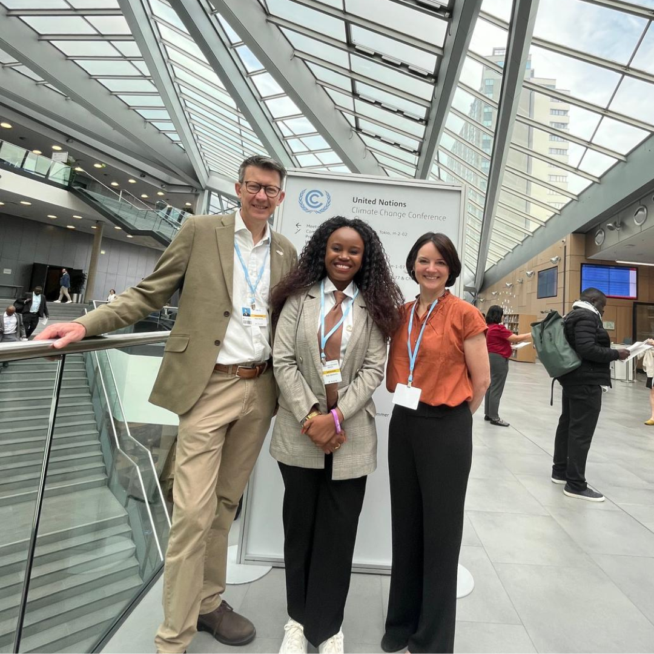
Disability inclusive climate action gains momentum at SB64
At this year’s Bonn Climate Change Conference, known as SB64, the Disability Caucus showed just how far disability inclusion has come – and demonstrated how much further it can go.