In this blog, Mary Keogh, CBM Global’s Advocacy Director, reflects on the UN Convention on the Rights of Persons with Disabilities (CRPD) as it marks 20 years since its adoption. She explores its significance for disability rights and inclusion, and the people who continue to turn its promise into meaningful change.
Reflections on the CRPD at 20: laws matter – but people make change
Posted on:
Tuesday, June 2nd, 2026
Author:
Mary Keogh, CBM Global’s Advocacy Director
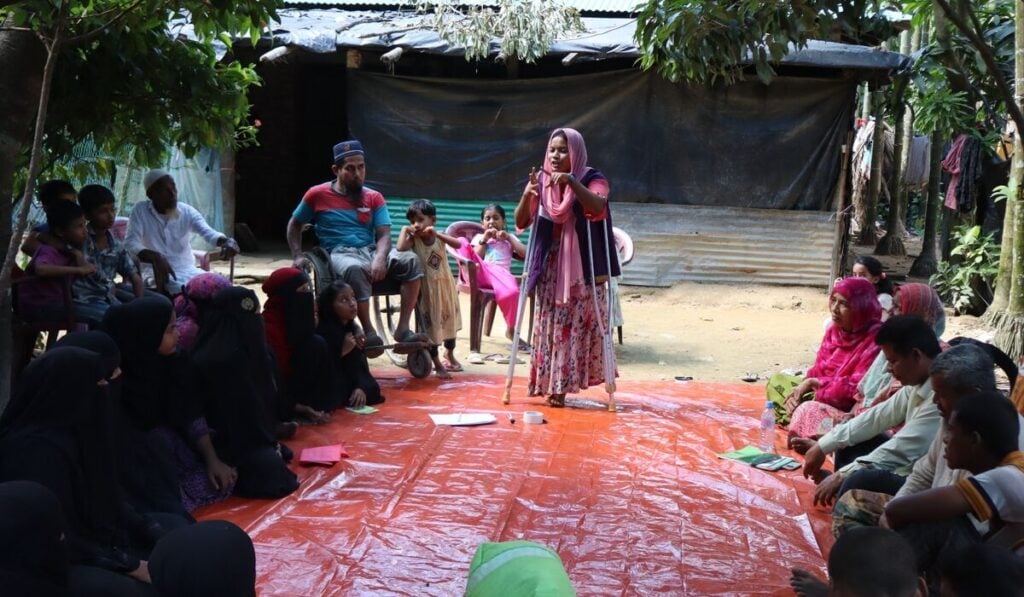
For the CBM Global Federation, the CRPD is our north star, guiding us towards disability justice and inclusion in everything we do. It underpins our strategy; it amplifies our values and provides us a framework for holding ourselves accountable to.
Adoption of the CRPD – when and where?
In December 2006, the United Nations General Assembly adopted the CRPD. Two years later, in 2008, it entered into force as international law. In 2026, we mark 20 years since that historic adoption.
A fair question might be: are we celebrating too early? Should we not wait until 2028? Our answer is no. Without its adoption by the General Assembly in 2006, the CRPD would never have come into being.
The CRPD is widely recognised as the fastest negotiated human rights treaty. That speed, however, should not be mistaken for simplicity. It took dedicated ambassadors who chaired the negotiations, governments who participated and civil society who observed. Negotiations spanned several years. An Ad Hoc Committee was established in 2002 to consider proposals for the treaty text. After eight sessions, the final text was presented. By the end of 2006, the General Assembly adopted it.
Importantly, this process was one of the most inclusive in UN treaty-making history. Civil society, including organisations of persons with disabilities, played a central role as observers and advocates. The CRPD stands as a powerful example of global cooperation and decision-making that sought to include all voices and lifted the voices of persons with disabilities.
The CRPD was not created in a vacuum. Foundations had already been laid by the earlier international frameworks, including the non-binding UN Standard Rules on the Equalization of Opportunities for Persons with Disabilities. While 20 years is a short period in historical terms, it has been a significant era for disability rights, marked by rapid change and growing recognition worldwide.
Limitations and challenges
No international law can, on its own, solve all the world’s injustices. The CRPD is not a magic wand. Laws sit in statutes, policies, and regulatory frameworks but it is people, and the systems people design and manage, who bring them to life.
This reality is starkly reflected in the fact that, 20 years after the CRPD’s adoption, human rights violations against persons with disabilities continue to occur daily across the globe. Dehumanisation persists. Lives are lost. Liberties are restricted. Opportunities to live full and dignified lives are denied due to discrimination that remains deeply embedded in many societies, both wealthy and poor.
These violations do not happen in the abstract. They are the result of human decisions and systems that continue to exclude and marginalise persons with disabilities.
The positives
Alongside these sobering realities, there are also significant achievements to recognise and celebrate.
Governments that have championed legal and policy reforms aligned with the CRPD. Public officials and institutions that have developed implementation plans and allocated budgets to support them. UN agencies and multilateral development banks have adopted strategies and accountability frameworks. Development and humanitarian actors have increasingly centred and invested in disability equity within their portfolios.
At CBM, we have seen the positive impact of the CRPD directly through our partner programmes and collaborations.
At the heart of these gains are people and movements within civil society who continue to push for change. Disability activists, organisations of persons with disabilities, national and regional networks, INGOs, NGOs, foundations, and researchers persist in holding governments to account and demanding progress where commitments fall short.
CBM is honoured to be part of these movements and to work tirelessly alongside those who continue to make the CRPD a living instrument for change.
More news like this
August 4, 2026
Putting people at the heart of change: Andy Burnham’s chance to rewrite Britain’s international development legacy
In 2024 Labour promised a world free from poverty on a liveable planet.
July 18, 2026
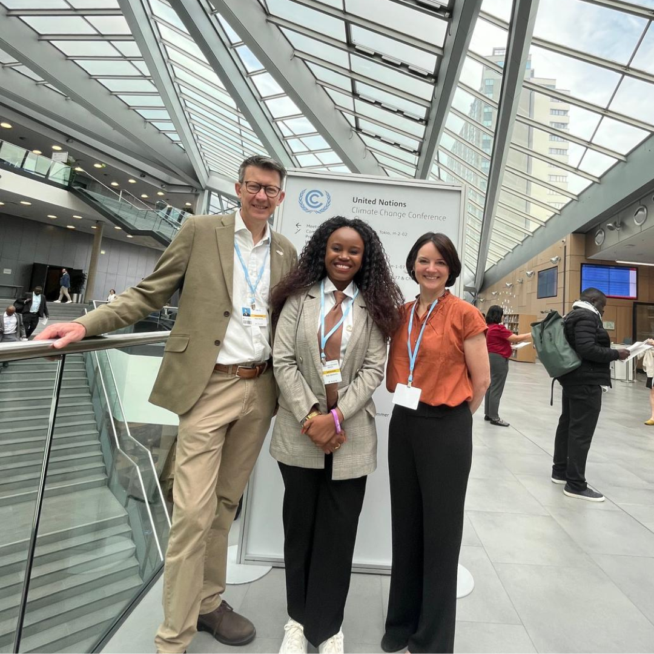
Disability inclusive climate action gains momentum at SB64
At this year’s Bonn Climate Change Conference, known as SB64, the Disability Caucus showed just how far disability inclusion has come – and demonstrated how much further it can go.
July 15, 2026
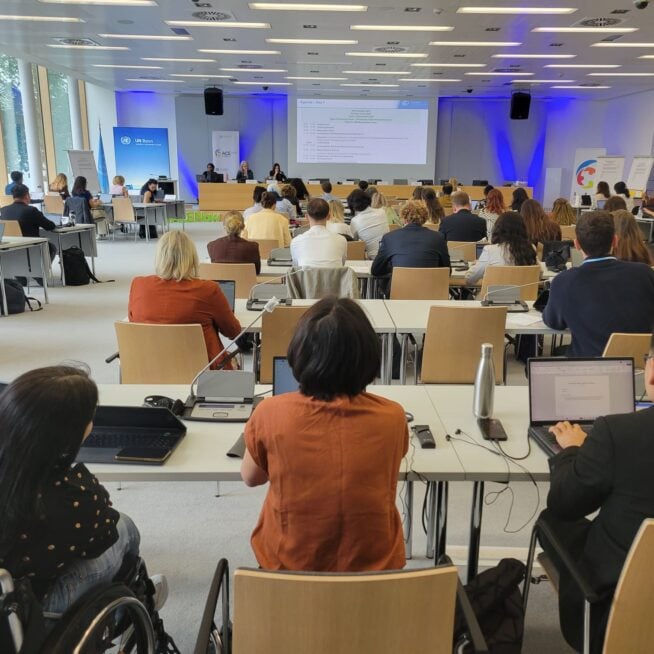
Disability inclusive climate action is better climate action
This June, CBM UK joined government representatives and other civil society organisations, including disability activists, to participate in technical workshops on Action for Climate Empowerment (ACE), and contribute disability inclusion perspectives.