As I write this, I can hardly believe that the Supporting Adolescent Girls’ Education (SAGE) project in Zimbabwe has come to an end after almost eight years! It has been an incredible journey and a privilege to be involved with this amazing project from the very beginning.
How inclusive education can transform the lives of girls with disabilities
Posted on:
Thursday, August 6th, 2026
Author:
Elfreda Whitty, CBM UK Programme Manager
What is SAGE?
The SAGE project was managed by a group of organisations led by Plan International, with specialist support from CBM to ensure girls with disabilities were included. It was funded by UK Aid through the Girls’ Education Challenge fund and the Foreign, Commonwealth & Development Office (FCDO) Zimbabwe.
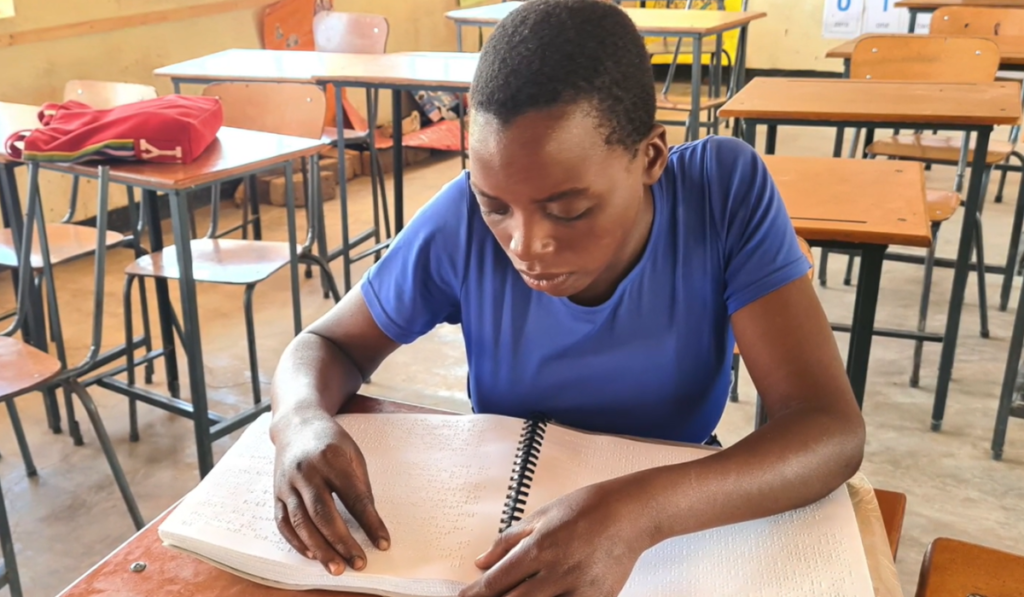
At the heart of the project are marginalised girls from some of Zimbabwe’s most underserved communities, finding their voice, hope and confidence. They do this through a two-year accelerated curriculum that builds literacy, numeracy and essential life skills – as well as a better understanding of their rights. After two years, the project facilitates the girls’ transition into formal education or technical and vocational training. And here they gain life-changing livelihood skills such as tailoring, carpentry and mechanics.
Why disability inclusion in education matters
CBM’s role has been to provide technical expertise on disability inclusion, ensuring it is embedded throughout the programme. This included developing inclusive teaching approaches for community educators to educate communities on misconceptions around disability. It also included identifying and assessing of girls with disabilities, and providing over 700 assistive devices such as spectacles, hearing aids, white canes, and wheelchairs. And we advised on accessible learning materials and adapting learning environments – including community hubs and vocational training centres.
Of the 19,000 marginalised girls that SAGE reached, CBM has supported 1,134 girls with disabilities. This enabled them to improve their foundational learning alongside their peers, develop key life skills, participate in social activities, and pursue livelihood training. These opportunities are vital for girls with disabilities to live more independently and be active members of their community.
Meet Lydia
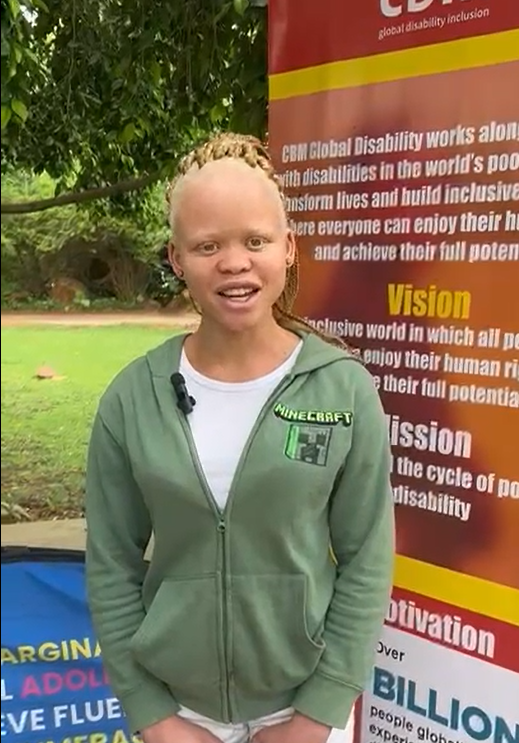
One of these girls is 19-year-old Lydia who I met in Harare in December. Lydia, who has albinism and a visual impairment, spoke at a Ministry of Education conference on Non-Formal Education to her peers, teachers, community members and government officials about SAGE’s impact on her life. She told us that after completing her foundational learning, she trained in car mechanics. Now she has a job, can pay her brother’s school fees and proudly showed us the smartphone she’d bought.
Lydia’s story reflects the resilience of the SAGE programme – both the girls and the team who delivered it. Together, they navigated COVID-19, a cholera outbreak, severe drought, and ongoing economic uncertainty. I feel incredibly fortunate to have worked alongside such dedicated and talented colleagues from Plan International, the Open University and Apostolic Women’s Empowerment Trust, both in Zimbabwe and the UK.
Recognising local knowledge
My colleague Joannes Mbaimbai, CBM Zimbabwe’s Inclusive Education Specialist, has led our SAGE work over the past six years. His expertise and dedication have been instrumental in achieving strong disability inclusion outcomes for the project. For example, ensuring girls are properly assessed for devices to enable them to attend school, and supporting the consortium’s contribution to the Non-Formal Education Policy Review with the Ministry of Primary and Secondary Education. It’s this that has helped to embed the SAGE model into government policy for a more sustainable and inclusive education system going forward.
What’s next for SAGE?
As part of the project’s legacy, CBM collaborated with the Open University to develop an innovative disability-inclusive toolkit app. The app provides educators with practical guidance on adapting lessons, improving accessibility and supporting learners with different disabilities. It is now being rolled out across all 72 districts in Zimbabwe, helping more teachers create inclusive classrooms long after the project has ended. This collaborative work was recognised internationally when the SAGE partnership received a Times Higher Education Award in 2025.
SAGE is not an end, but a beginning – for the more than 19,000 out-of-school adolescent girls whose lives have been transformed. It is also the beginning for girls like Lydia, providing them with essential skills, confidence, and independence to live fulfilled lives. Some of my enduring memories of seeing SAGE in action in the classrooms have been the purpose and potential that it has given these girls.
It is our hope that the momentum of SAGE and its impact will be carried forward to benefit future generations of learners in Zimbabwe.
More news like this
October 6, 2026
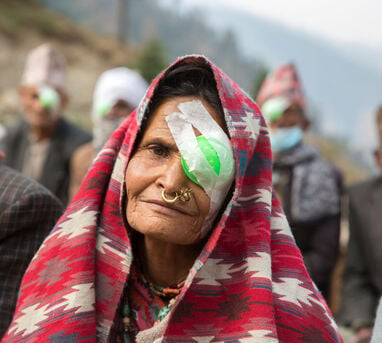
World Sight Day: shining a light on eye health and CBM’s work
This World Sight Day, we’re shining a light on the importance of accessible eye care and the simple innovations helping to bring sight-saving services closer to the people who need them.
October 1, 2026
Your love can Light the Way This Christian Blind Mission Sunday 2026
This year, Christian Blind Mission (CBM) Sunday falls on 12 October, the first Sunday after World Sight Day on 9 October. Churches across the country are invited to join CBM in prayer and reflection for people living with avoidable blindness.
October 1, 2026
Longer lives must be inclusive lives: why ageing matters to disability inclusion
The world is living longer. But as populations age, how do we rethink the systems needed to support longer lives lived with dignity, choice and inclusion?